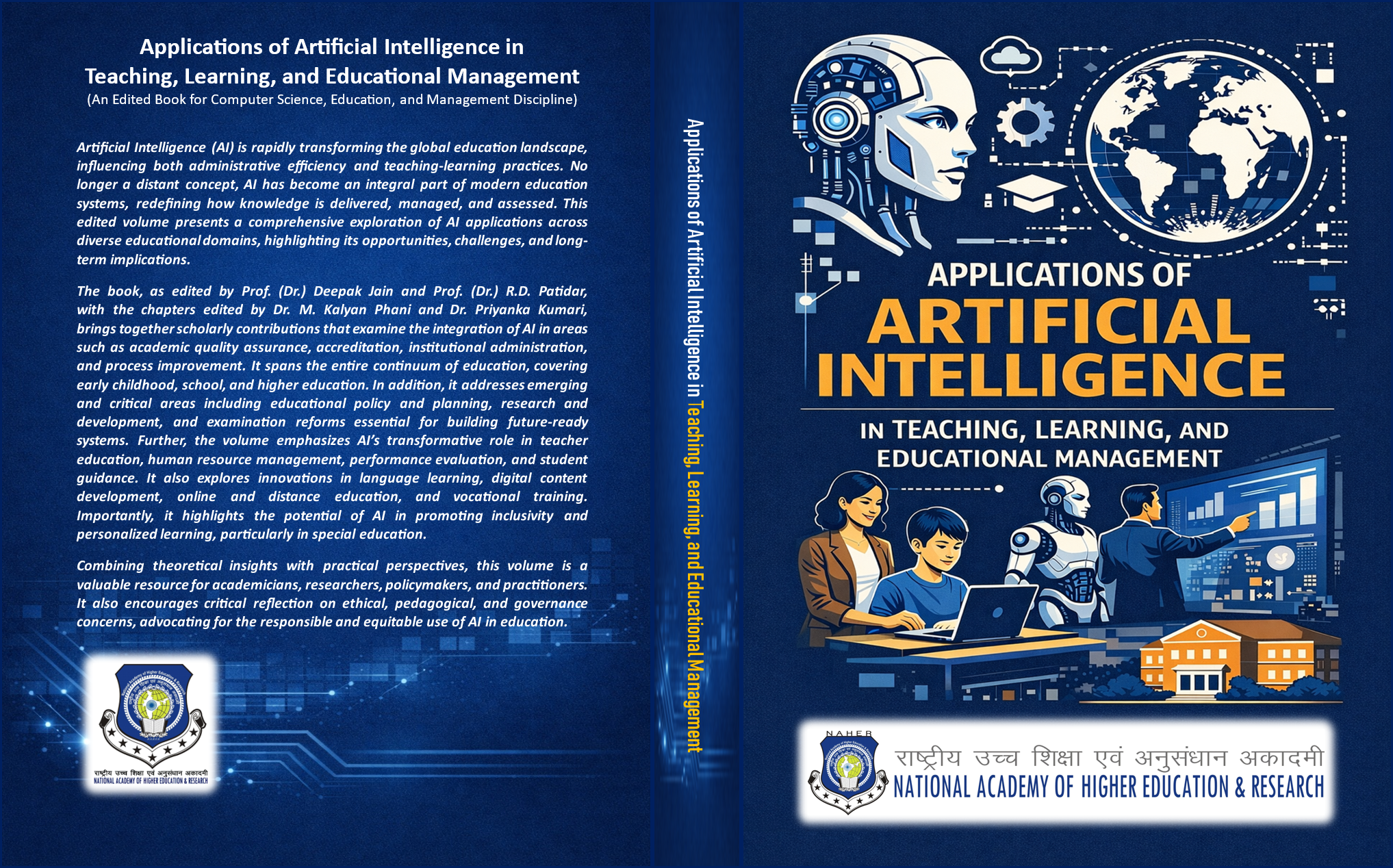
Artificial Intelligence for Student Counselling & Guidance
DOI:
https://doi.org/10.62431/87ge3k17Keywords:
Student counseling, Affective computing, Predictive analytics, Mental health, Emotional well-being support, Inclusive education, Tailored recommendations, Scalable support, Transformative toolAbstract
Student counseling and guidance play a critical role in supporting learners’ academic success, emotional well-being, social adjustment, and career development in an increasingly complex educational landscape. Traditional counseling models, while grounded in empathy and professional expertise, often face significant limitations such as counselor shortages, growing student populations, diverse psychological needs, and social stigma that discourages help-seeking behavior. These challenges are further intensified by heightened academic pressure, rapid technological change, uncertainty in career pathways, and emerging global disruptions.
Artificial Intelligence (AI) offers a transformative opportunity to enhance student counseling and guidance by enabling scalable, data-driven, and proactive support systems. Through techniques such as machine learning, natural language processing, and predictive analytics, AI can analyze academic performance, behavioral patterns, and interaction data to identify at-risk students, personalize guidance, and support timely interventions. AI-powered tools—including virtual counseling assistants, intelligent recommendation systems, and predictive dashboards—can extend access to counseling services beyond traditional constraints of time and availability, while encouraging confidential and low-pressure student engagement.
Importantly, AI is not intended to replace human counselors but to augment their capabilities by automating routine tasks, providing actionable insights, and supporting evidence-based decision-making. Human judgment, empathy, ethical reasoning, and cultural sensitivity remain central to effective counseling practice. This chapter explores the conceptual foundations, applications, benefits, and limitations of AI in student counseling and guidance. It also addresses critical ethical considerations such as data privacy, algorithmic bias, transparency, and the risk of over-reliance on technology.
By integrating Artificial Intelligence with human-centered counseling practices, educational institutions can develop more inclusive, responsive, and preventive guidance systems. Such an approach holds significant potential to empower students to navigate academic challenges, manage emotional well-being, and make informed career decisions in a rapidly evolving world.
References
Yola, R., Azizah, W., Azizah, N., & Sabarrudin. Implementation of Use Deep Artificial Intelligence (AI) Guidance and Counseling Student Learning Process. BICC Proceedings, 2, 138–142, 2024.
Ririn, F. T. S., Asni Murni, V., & Sabarrudin. The Role of AI in Guidance and Counseling to Optimize Learning Motivation. BICC Proceedings, 2, 143–147, 2024.
Rahmi Amelia Putri, R., Mailana, Z., Fadilah, N., Zulkifli, F., & Oktarini, I. The Effectiveness of Artificial Intelligence Technology in Facing the Challenges of Guidance and Counseling in the Digital Age. BICC Proceedings, 2, 213–219, 2024.
The Uses of Artificial Intelligence in Psychological Counseling and Guidance: An Analytical Study. Journal of Educational and Psychological Sciences, 9(12), 118–129, 2025.
Sul Hastevin, R. Stefanus, D. Y. Birrang Allo, C. P. P. Tohamba, N. Nurhikmah & A. Hakim. Analysis of the Impact of Using AI-Based Chatbots in Guidance and Counseling Services in Schools. International Journal of Education and Literature, 4(3), 176–180, 2025.
C. Jaiswal, L. Jaiswal, N. Kalia, & O. P. Sharma. Artificial Intelligence in Counseling: Evaluating Its Strengths, Limitations, and Ethical Considerations in Indian Schools. International Journal of Science and Social Science Research, 2(4), 328–331, 2025.
Abubakar, H. & Igboaungo, E. Application of Artificial Intelligence in School Counseling. Journal of Contemporary Research in Educational Administration and Management, 2(3), 72–77, 2025.
Ali Saeidi & Alireza Ghorbani. Using Artificial Chatbots as Academic Counselors: Case Study of ChatGPT. Journal of Assessment and Research in Applied Counseling (JARAC), 2026.
AI-Powered Academic Guidance and Counseling System Based on Student Profile and Interests. Applied Systems and Innovations, 7(1), Article 6, 2024.
Mohammed Bala Hashidu. Collaboration between Human and AI in Counselling. BICC Proceedings, 2, 226–231, 2024.
Tang, Y., Kang, Y., Wang, Y., et al. CA+: Cognition Augmented Counselor Agent Framework for Long-term Dynamic Client Engagement. arXiv preprint, 2025.
Yang Ni & Yanzhuo Cao. Exploring ChatGPT’s Capabilities, Stability, Potential and Risks in Conducting Psychological Counseling through Simulations in School Counseling. arXiv preprint, 2025.
Brocki, L., Dyer, G. C., Gładka, A., et al. Deep Learning Mental Health Dialogue System. arXiv preprint, 2023.
Csaszar, I. & Curry, J. R. Generative AI and the Development of Assignments that Promote Critical Thinking and Ethical Application in Counselor Education. Research Issues in Contemporary Education, 2024.
International Journal of Information and Education Technology, Vol. 15(11), 2025. Technological Advancements in Educational Counselling: Exploring Role of AI, Data Analytics & Virtual Guidance Platforms.
Journal of Theoretical and Empirical Studies in Education. Relationship Between Use of AI and Learning Guidance & Counselling, 10(1), 2025.
Recommendations for Practicing Counselors and Their Use of AI. American Counseling Association guidance report, 2025.
Best Practices for Ethical AI Use for Counseling Students. Counseling.org resource, 2025.
S. Westman. Artificial Intelligence for Career Guidance. IAFOR Journal of Education, 2021.
AA Galadanchi. Ethical and Practical Implications for AI-Supported Guidance. Unijerps, 2025.
Artificial Intelligence Integration in Student Counseling Among Guidance and Counseling Lecturers. ResearchGate study, 2026.
Zhang, Q. & Khalid, N. F. Technological Advancements in Educational Counseling: AI, Data Analytics, and Virtual Guidance Platforms. International Journal of Information and Education Technology, Vol. 15(11), 2025.
Adaptive Learning as an AI-Enabled Educational Support. Wikipedia / education technology overview, 2025.
Computational Psychometrics for AI-Driven Educational & Psychological Assessment. Wikipedia / computational psychometrics overview, 2025.
Downloads

Downloads
Published
Issue
Section
License
Copyright (c) 2025 Vanshika Jain, Sujata Panda

This work is licensed under a Creative Commons Attribution 4.0 International License.
Author(s) hold complete right on the content of this article.