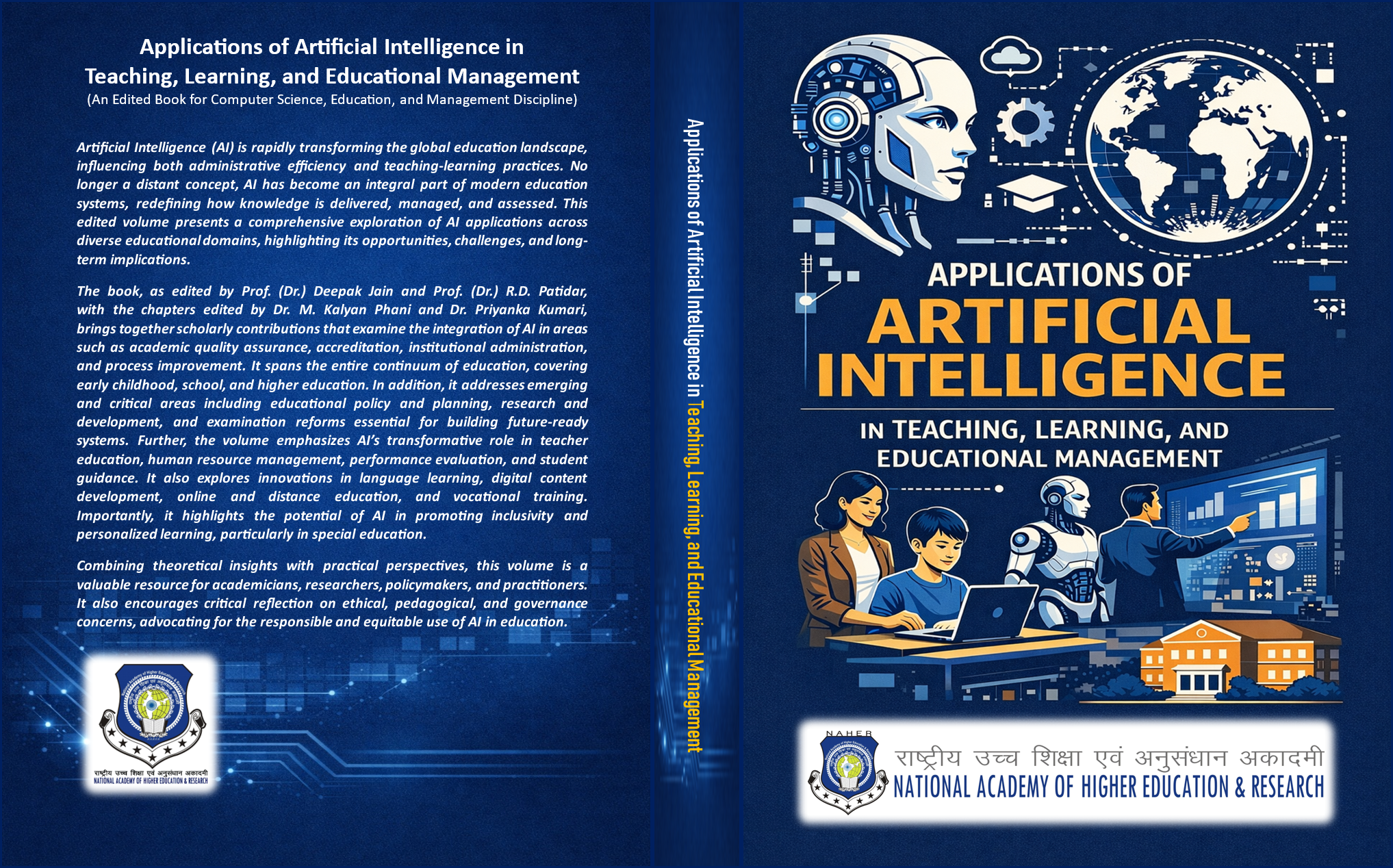
Artificial Intelligence for Teacher Performance Evaluation
DOI:
https://doi.org/10.62431/epcyaz50Keywords:
Teacher performance evaluation (TPE), Snapshot evaluations, Paradigm shift, Computer Vision, Predictive Analytics, Sentiment Analysis, Teacher resistance, Professional Learning Communities (PLCs)Abstract
Teacher performance evaluation (TPE) is a critical mechanism for ensuring educational quality, professional accountability, and continuous instructional improvement. Traditional evaluation approaches—such as classroom observations, student feedback, peer reviews, and administrative assessments—have long contributed to understanding teaching effectiveness but are often constrained by subjectivity, inconsistency, limited scalability, and delayed feedback. These limitations restrict institutions’ ability to generate holistic, timely, and evidence-based insights into teaching practices. In response to these challenges, Artificial Intelligence (AI) has emerged as a transformative tool capable of redefining how teacher performance is assessed and enhanced.
This chapter explores the integration of AI into teacher performance evaluation, emphasizing its capacity to deliver objective, data-driven, and continuous assessment. AI technologies—including machine learning, natural language processing, computer vision, predictive analytics, and sentiment analysis—enable the systematic analysis of diverse data sources such as classroom interactions, instructional delivery, student engagement patterns, learning outcomes, and feedback narratives. By synthesizing quantitative and qualitative indicators, AI provides a comprehensive understanding of teaching effectiveness that extends beyond episodic evaluations. Real-time feedback systems, performance dashboards, and personalized professional development recommendations further support reflective practice and sustained instructional improvement.
The chapter also examines the practical applications, benefits, and limitations of AI-driven TPE systems. Key advantages include enhanced objectivity, scalability across large educational systems, timely feedback, personalized growth pathways, and support for continuous improvement. At the same time, critical challenges such as data privacy, algorithmic bias, overreliance on quantitative metrics, teacher resistance, and infrastructure constraints are discussed in detail. Ethical considerations—including transparency, accountability, fairness, and informed consent—are highlighted as foundational requirements for responsible AI adoption in educational evaluation.
Looking forward, the chapter outlines future directions for AI in teacher performance evaluation, including integration with professional learning communities, adaptive and context-sensitive evaluation models, emotionally intelligent AI, holistic human–AI assessment frameworks, and global benchmarking of teaching practices. Overall, this chapter argues that when implemented ethically and collaboratively, AI does not replace human judgment but rather augments it—transforming teacher evaluation into a supportive, formative, and evidence-based process that enhances professional growth, instructional quality, and student learning outcomes.
References
Jiao, S., Sururi, S., Komariah, A., & Kurniatun, T. C. (2026). Integrating Artificial Intelligence into Teacher Performance Evaluation: Evidence from Undergraduate Institutions in Anhui Province. Journal of Sustainable Competitive Intelligence, 16, e0606.
Almubarak, A., Alhalabi, W., Albidewi, I., & Alharbi, E. (2024). An analytical approach for an AI-based teacher performance evaluation system in Saudi Arabia’s schools. SN Applied Sciences, 6:406.
Tan, X., Cheng, G., & Ling, M. H. (2024). Artificial intelligence in teaching and teacher professional development: A systematic review. Computers and Education: Artificial Intelligence.
Gu, H., Jin, F., & Wei, K. (2023). Research on Teacher Evaluation Based on Artificial Intelligence and Big Data. In Proceedings of ICMEIM 2023.
Frontiers Editorial Team (2025). An AI-powered framework for assessing teacher performance in classroom interactions: a deep learning approach. Frontiers in Artificial Intelligence.
Heine, S. (2025). Applying artificial intelligence in teacher education. Teaching and Teacher Education, 100: 103713.
Garzón, J., et al. (2025). Systematic Review of Artificial Intelligence in Education. Multimodal Technologies and Interaction, 9(8):84.
Alper, A., & Karademir Coskun, T. (2024). Evaluating the evaluators: AI vs. teacher-based assessments. DER – Digital Education Review, 45.
Tan, X. et al. (2024). Computer Vision and AI methods for classroom interaction analysis. Computers and Education: Artificial Intelligence.
Niculescu, A. I., Ehnen, J., & Zhou, J. (2025). On the development of AI performance and behavioral measures for teaching and classroom management. arXiv:2506.11143.
Ding, S., & Magerko, B. (2025). TEACH-AI framework and benchmark for evaluating AI in education. arXiv:2512.04107.
Cukurova, M., Suraworachet, W., & Zhou, Q. et al. (2025). Towards synergistic teacher-AI interactions with generative AI. arXiv:2511.19580.
Lee, U., Jeong, Y., Koh, J., et al. (2024). I See You: Teacher Analytics with GPT-4 Vision-Powered Observational Assessment. arXiv:2405.18623.
Muna, N. I., Sumarti, S., Harjono, H., et al. (2025). Evaluating Chemistry Teacher’s Questioning Skills with AI. International Journal of Pedagogy and Teacher Education.
AI-based teaching evaluations: How well do they reflect student perceptions? (2025). Computers and Education: Artificial Intelligence.
Research on the Framework of Classroom Teaching Evaluation Enabled by AI Technology. (2025). Frontiers in Educational Research.
Tan, X., et al. (2024). Artificial intelligence in teaching: Systematic insights into teacher practice. ScienceDirect.
Tripathi, T., et al. (2025). Teaching and learning with AI: K-12 teachers’ engagement. Frontiers in Education.
Zhang, S., Xiao, R., Botelho, A. F., et al. (2026). How to Assess AI Literacy: Teacher AI competence measures. arXiv:2601.06101.
Artificial intelligence in education (Wikipedia overview). Education and Information Technologies summary.
Mishra, P., & Koopler, M. (2024). Generative AI, teacher knowledge, and educational research. TechTrends.
Artificial intelligence in teaching and professional development: A global review. Computers and Education: AI.
AI tools for personalized feedback and adaptive learning in education. Multimodal Technologies and Interaction.
AI classroom interaction detection using deep learning object detection frameworks. Computers and Education: AI.
Generative AI and teacher professional practice: Challenges and opportunities. Educational Technology Research and Development.
Selvakumari, S. (2019). Robotic intelligence. Scholar: National School of Leadership.
Thapar, R., & Pooja (2025). Education 4.0: Revolutionizing Learning by Transitioning from Chalkboards to Innovative Technology in India. OPJU Business Review.
Patil, H. S., Badgujar, S. V., Satish Patil, S., Dhamane, A. A., & Bhikanrao, P. (2025). AI-Powered Teacher Assistant: Automated Grading and Personalized Feedback. IJERT.
Embedded Based Machine Learning Algorithms for Detection (general ML context). DSJEM.
Education 4.0 and AI adoption challenges in teacher roles (qualitative analysis). OPJU Business Review.
Downloads

Downloads
Published
Issue
Section
License
Copyright (c) 2025 Jaya Prakash Rath, Kumari Subhra Rani, Deepa Jain

This work is licensed under a Creative Commons Attribution 4.0 International License.
Author(s) hold complete right on the content of this article.